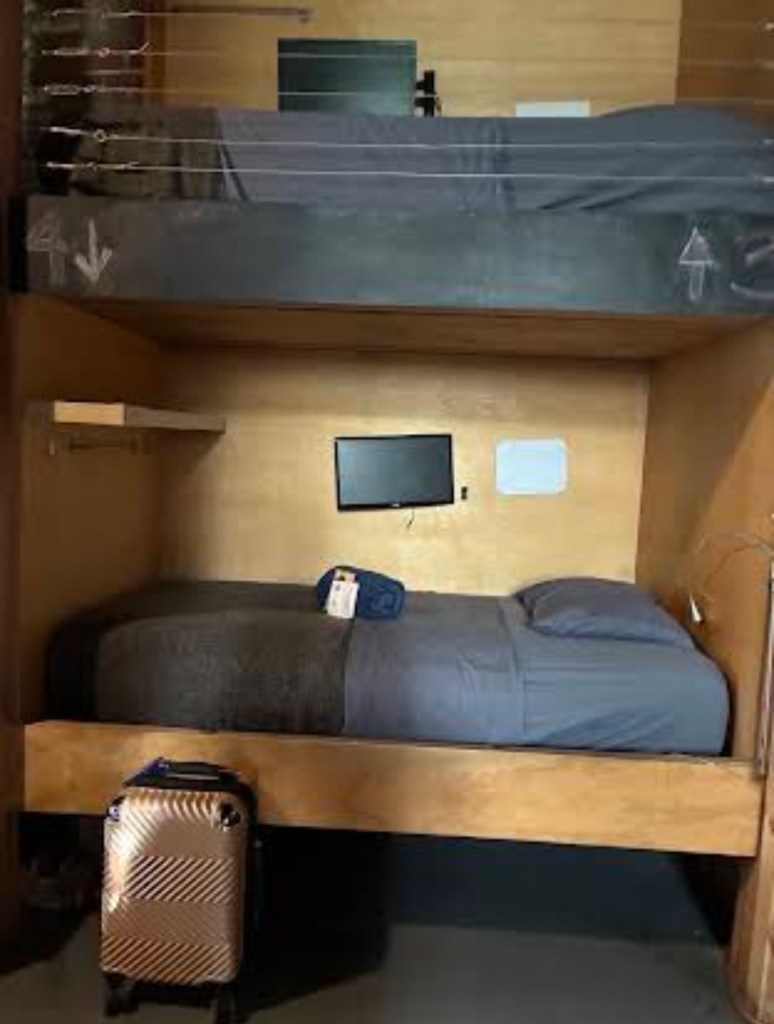
I recently received a question on social media about booking a bed at the Pangea Pod Hotel, in Whistler, BC. “Are you out of money or did you want to see how the other half lived?” As a full-time solo traveler, I really never think in terms of money. I also never really plan. I just go. So, if I’m disembarking from a cruise in San Diego, and I can’t book a roomette on Amtrak, until the following day … then … a scenic train ride, to Union Station, Los Angeles, and a night in a PodShare, near Little Tokyo, will do.
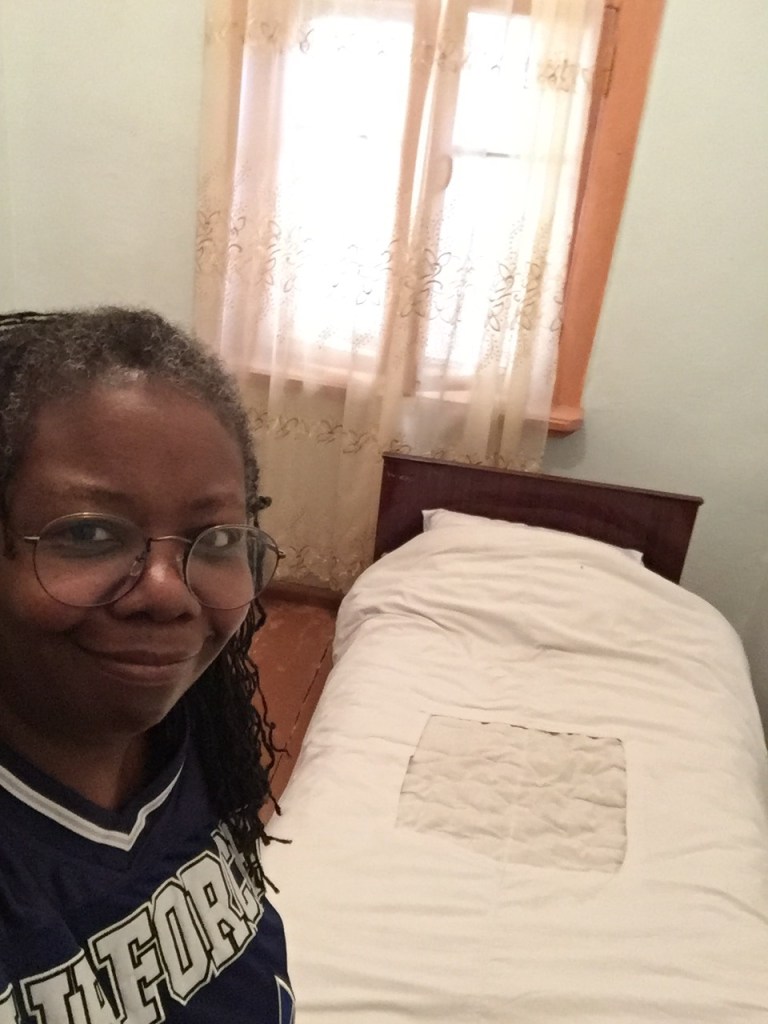
Without explaining my childhood housing situation (trust me) factoring in military quarters, college dorms, graduate student housing, a women’s residence in Washington DC, Peace Corps Kenya, more graduate student housing, plus campus housing (while an actual college faculty member at the university), then finally getting my own apartment, retiring, going back into the Peace Corps, (Armenia followed by Ethiopia) and then dorm room living (during the pandemic) while serving in AmeriCorps Alaska, and you’ll probably get why my travel housing options aren’t really the standard fare.
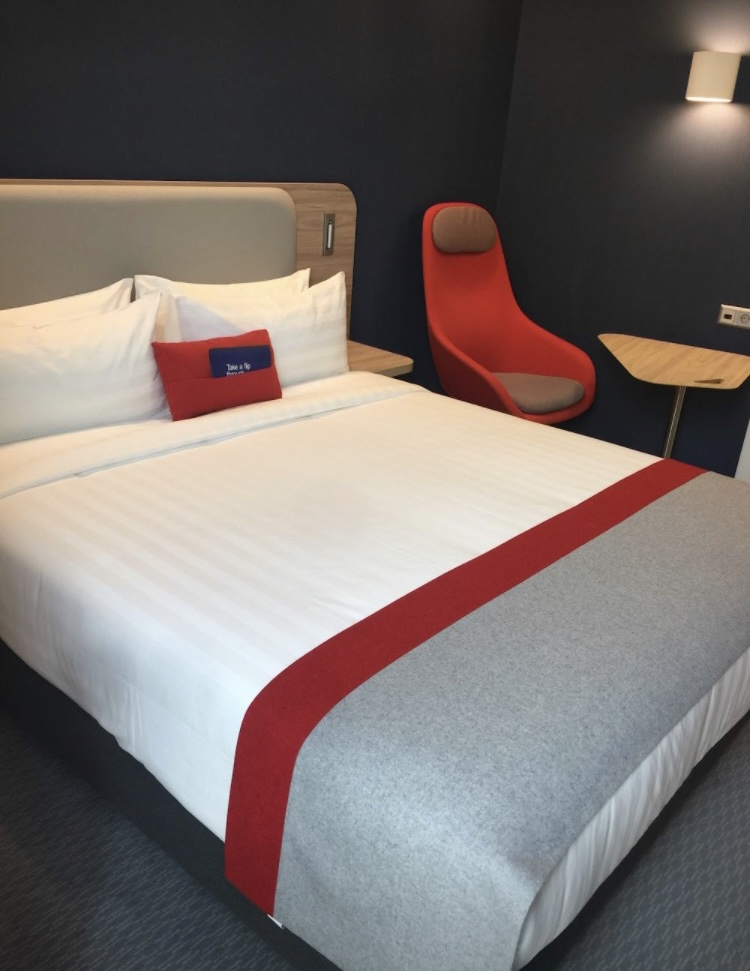
So, before you question my Peace Corps decision … Duke University paid out my unused vacation days, (I always kept them at maximum) upon my retirement. That slush fund alone kept me in hotels, in Yerevan, for my entire two years of service! And, of course, my personal savings took care of my international trips to the UK, UAE, Sri Lanka, and Tanzania. While serving in Peace Corps Ethiopia, volunteers were only allowed to leave our permanent work sites four days a month. So, the monthly Peace Corps allotment (housing was provided by the high school) covered any needed weekend stays, in my hub town, for banking, shopping, and picking up packages from the post office. I paid out of pocket for Zanzibar, my only vacation, during the February 2020 school break.
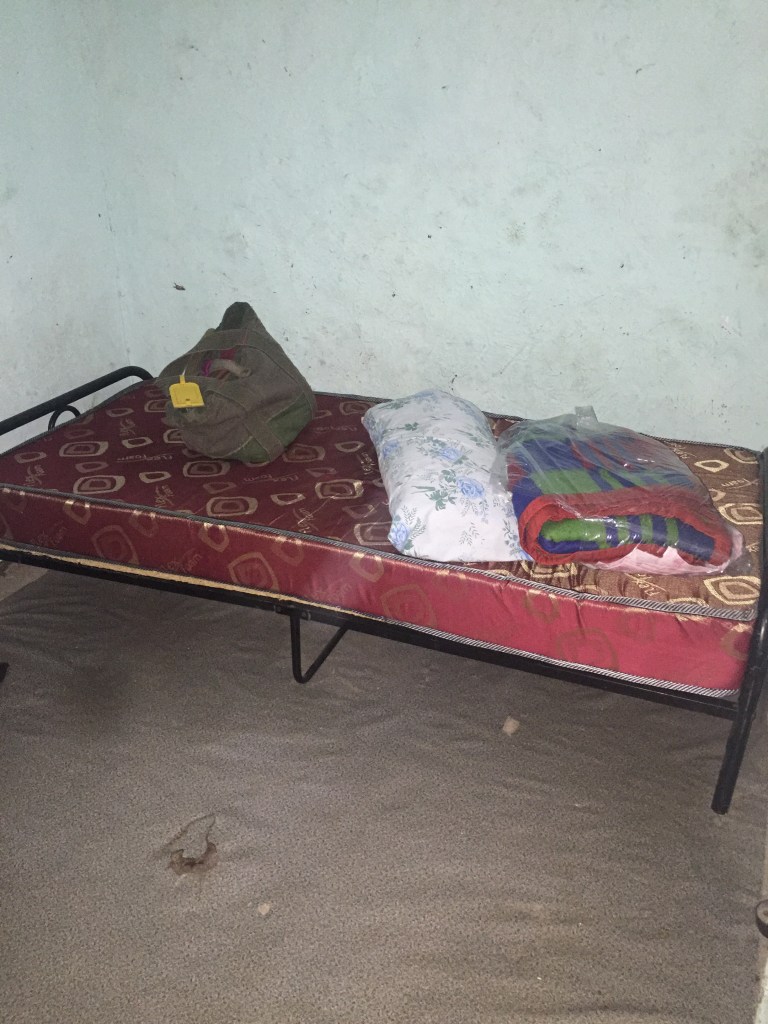
Pre-service training accommodations and permanent site housing in Ethiopia were a tad different from Armenia. Added to that … I also battled with the anti-malaria medication. I couldn’t keep any food down. My host family was told to just boil everything! That task was given to their youngest daughter. So, I would get a boiled potato for dinner, a boiled carrot for lunch, and so on. I finally gave up and turned to Coca-Cola. Around the time Peace Corps medical staff figured out that the anti-malarial pills were making me sick, my pre-service training was over, and I was heading to my permanent site. Luckily, it was located in a village almost 9,800 feet above sea level. I took that as a sign to stop taking the anti-malaria medication.
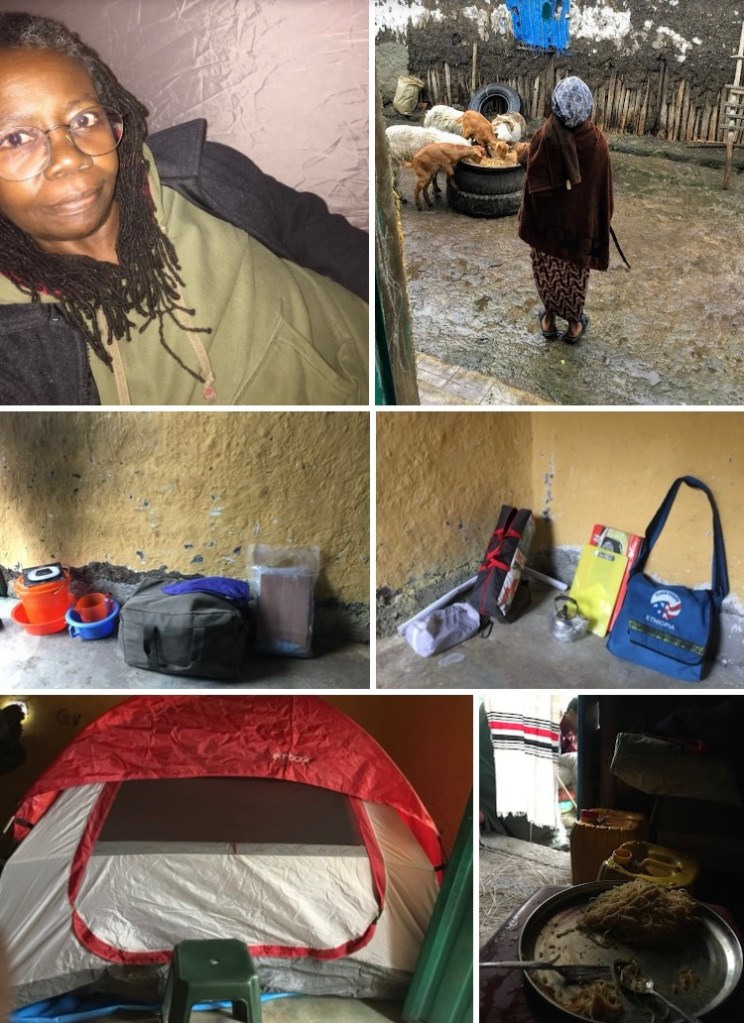
The high school in my village taught grades nine and ten. To continue on meant moving to a larger town, one with a high school offering a diploma. In my village of 2,000, I shared my housing compound with healthcare workers from the medical clinic. Most of the females spoke English. I was given two non-connecting rooms. A male medical workers had the room between my two. I used one room as my kitchen, laundry, shower area and the other as my bedroom. The headmaster of the high school also kept a room in the compound, but rarely used it.
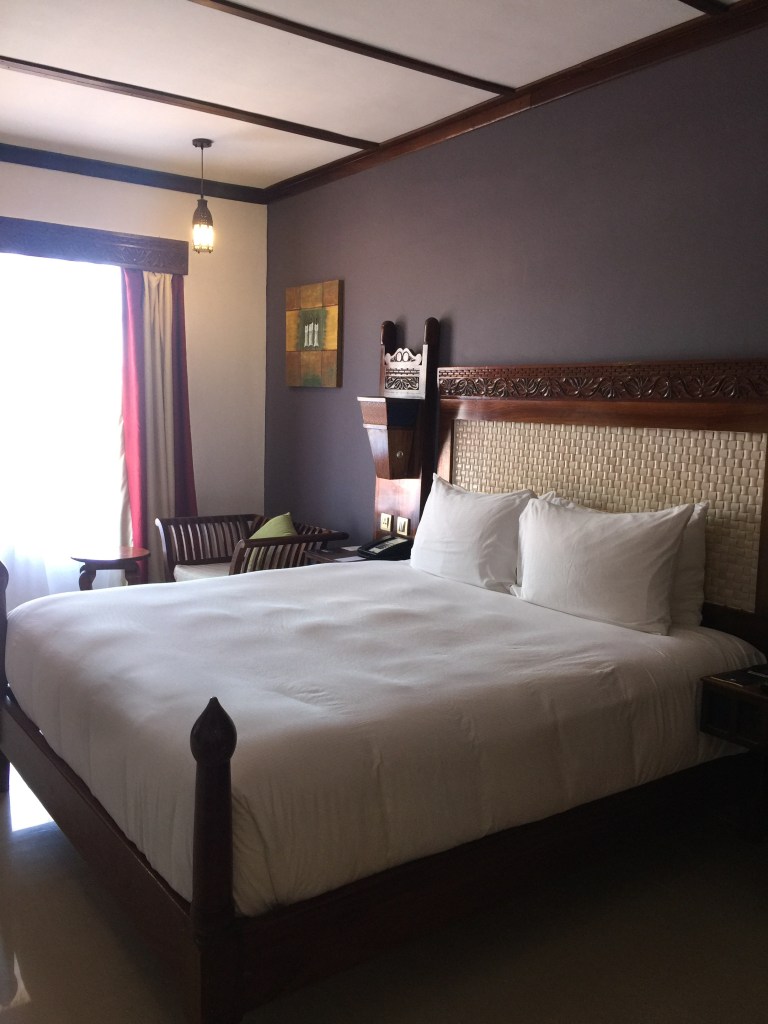
During my first school break, in February 2020, I headed to Zanzibar. My hotel wasn’t on the beach. It was one block away and a short distance from the Freddie Mercury Museum. I was reminded of my Peace Corps Kenya school vacations, in the mid 1980s. In a time before cellphones, I would head out to Malindi and Lamu, along the Kenyan coast and the Peace Corps office in Nairobi had no idea. And, like Lamu Island, Zanzibar’s labyrinth, in Stone Town, is a UNESCO World Heritage Site. It was an amazing homecoming. I was able to use the little KiSwahili that I still remember. I, of course, visited the Zanzibar Slave Memorial, (located at the former East African slave market site), and, just like at my Peace Corps site in Kenya, I ate Ugali and Sukuma Wiki, washed down with Orange Fanta. Then … I returned to Ethiopia.
Mid-March, the text message arrived early … “Do not go to school today. Go to your hub town, close your bank account, close your post office box, then return to the site, pack your bags, and get to Addis Ababa … by tomorrow.” I did as told and arrived to the capital the following day. Due to the pandemic, older volunteers were being housed in a separate hotel. The plan was to fly us home first. Then, it all fell apart. Peace Corps volunteers in other parts of Africa couldn’t get connecting flights in Europe. The only way out was a nonstop flight from South Africa or a nonstop flight from Ethiopia.
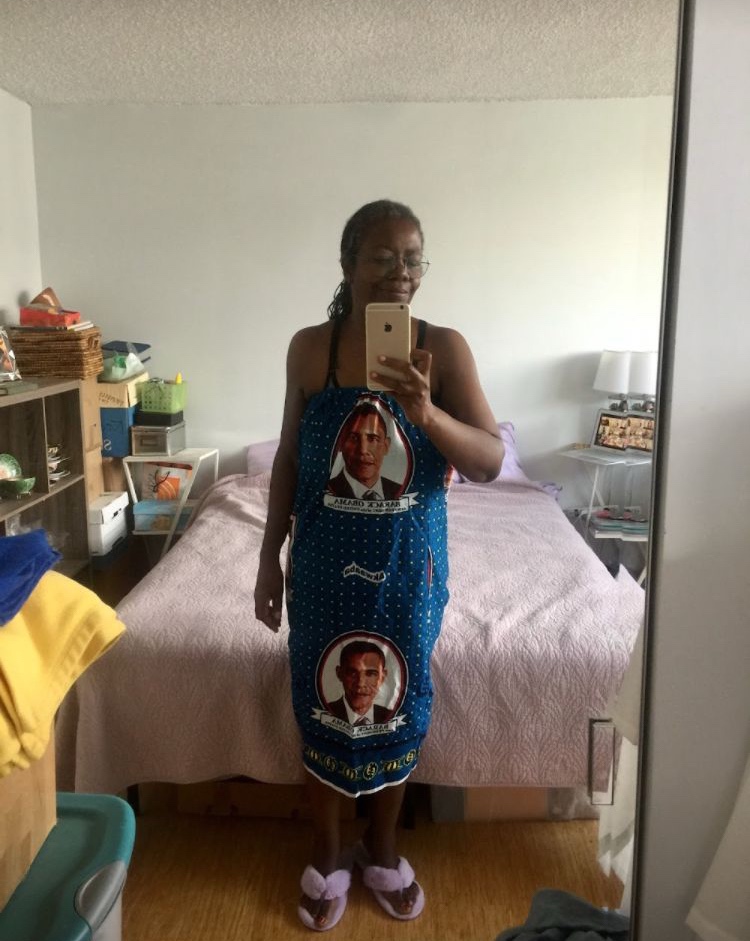
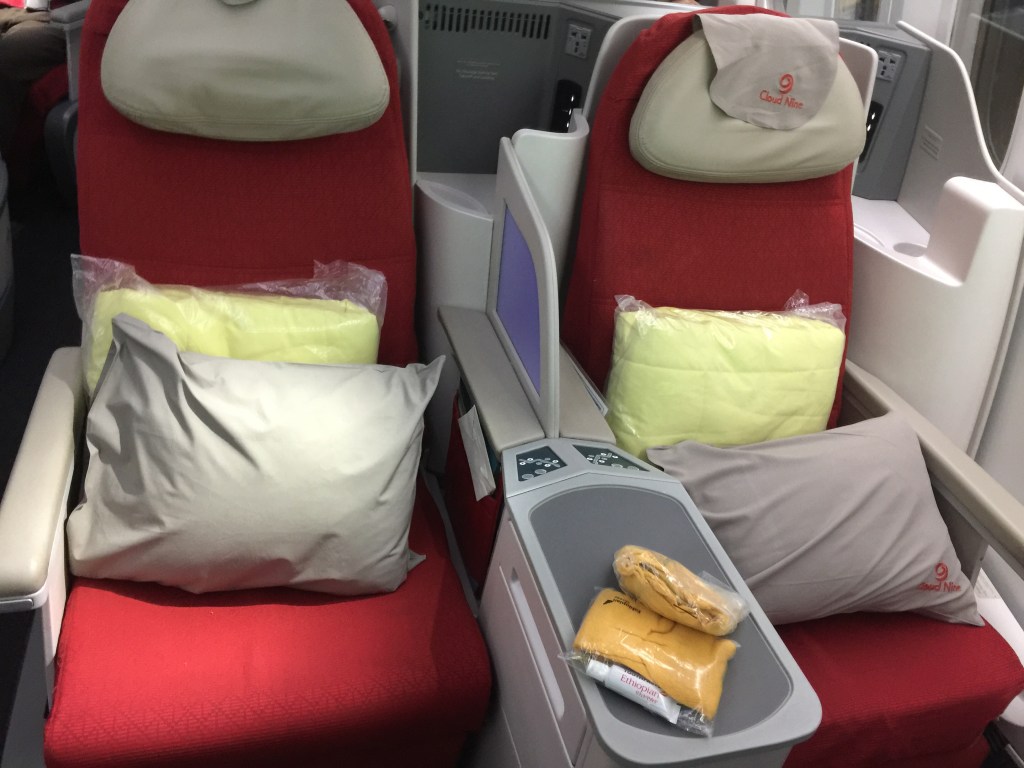
I knew next to nothing about the COVID pandemic, but … I knew one person who would. After my business class non-stop flight to Washington Dulles International Airport, Peace Corps flew me to San Francisco and then on to my “Home of Record” in Honolulu. My old Peace Corps Kenya friend, University of Michigan grad school roommate, with a graduate degree in Public Policy and another in Public Health would know COVID-19. She was the safest place I could think of going, in the middle of a worldwide pandemic. Hawaii didn’t disappoint.
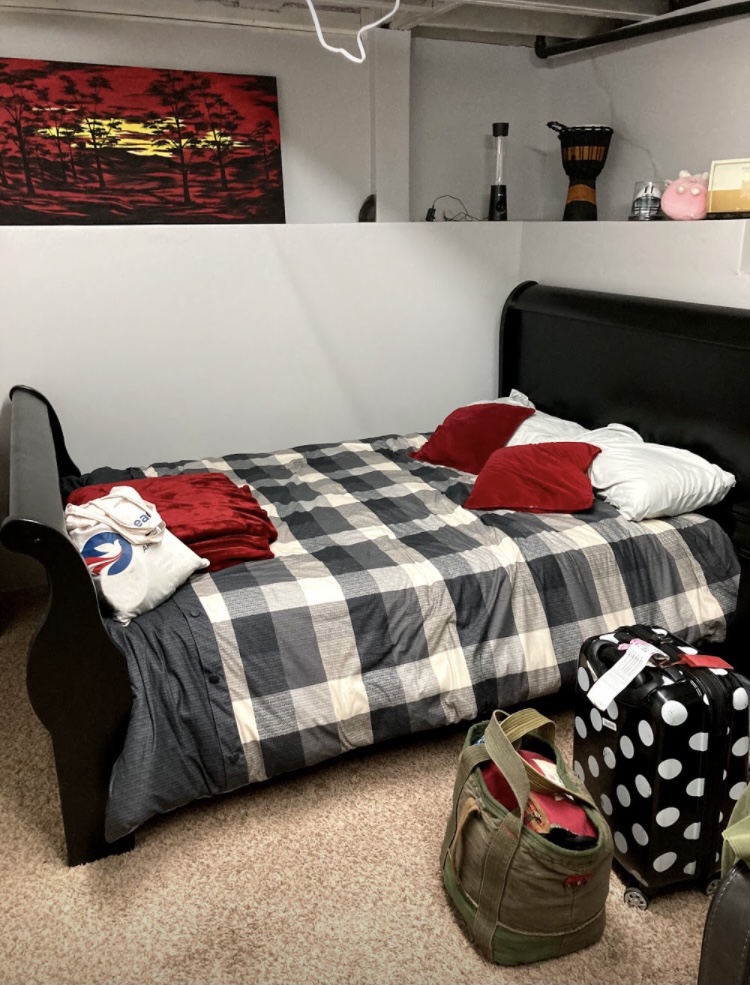
I waited for America to “reopen” in June. I switched my American Red Cross service location from North Carolina to Hawaii, in case my disaster services training was needed. I applied for jobs with the National Parks Service and Peace Corps Response. Then, the National Park Service site lost its funding and the Peace Corps Response start date was pushed into 2021. When a friend from Peace Corps Ethiopia announced that she’d been assigned to AmeriCorps in Alaska, I emailed the coordinator. Feeling good about my chances, I said goodbye to Hawaii and headed to Utah. From there, I stayed with friends, filled out the AmeriCorps application, did my job interview (via the telephone), and completed the required fingerprinting.
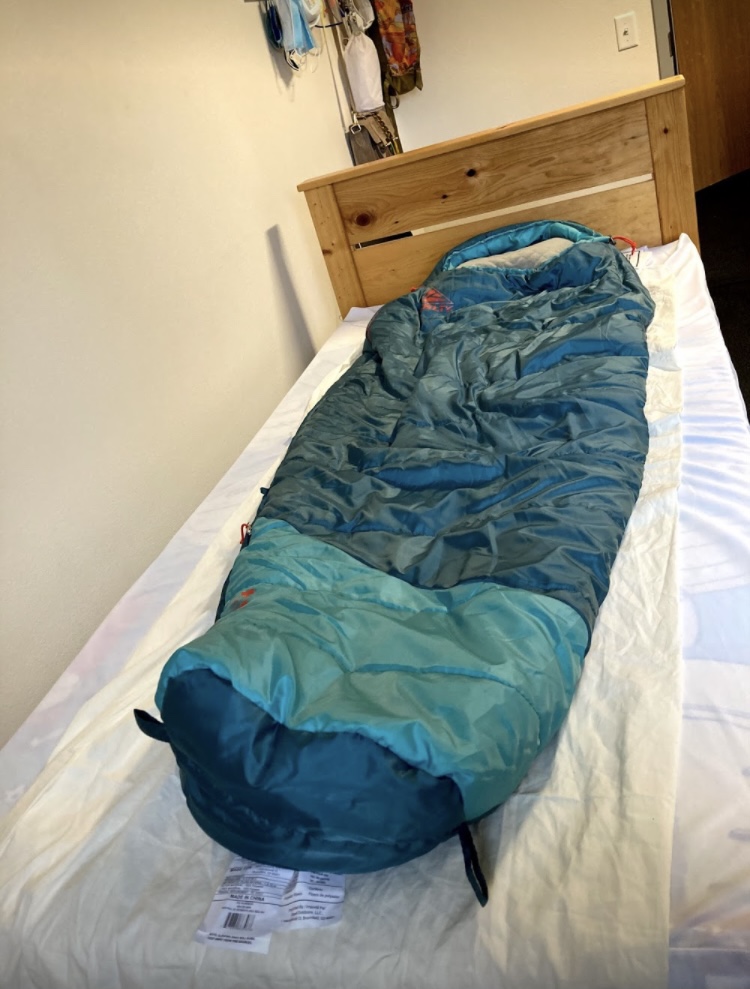
There were a number of Returned Peace Corps volunteers signing up for AmeriCorps. Being evacuated left many of us feeling not quite done. So, if we couldn’t complete our service overseas, we would become AmeriCorps members. Cleared for service, I met up with my new cohort at the airport in Seattle. I, of course, flew to Sitka first class. Rather than find my own housing, I decided to move into a dormitory that was offering housing to AmeriCorps members, at a very cheap rate, until the annual summer arts camp needed the rooms. My contract with AmeriCorps was for ten months. I’d be done, before the campers arrived.
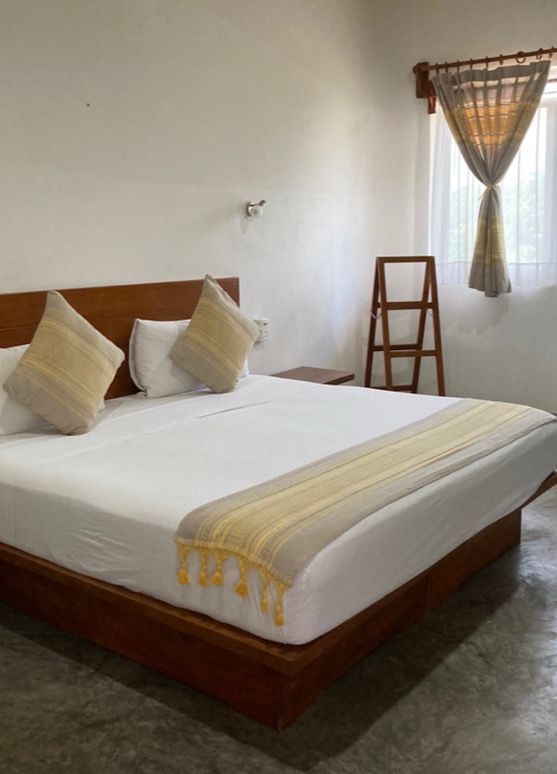
After two years in Alaska, I returned to the continental United States … and flew to Mexico for my birthday. Yes! I booked Casa Losodeli & Coworking and then upgraded from the shared female dormitory to a private room … as one does. Upon my return, I purchased an all America Pass with Amtrak. I had a month to use ten segments, living and sleeping in coach. I managed to do nine. I missed one by heading to Canada, after getting word about a possible rail strike that never happened. Still, crisscrossing America and meeting a few modern day Hobos was eye-opening.
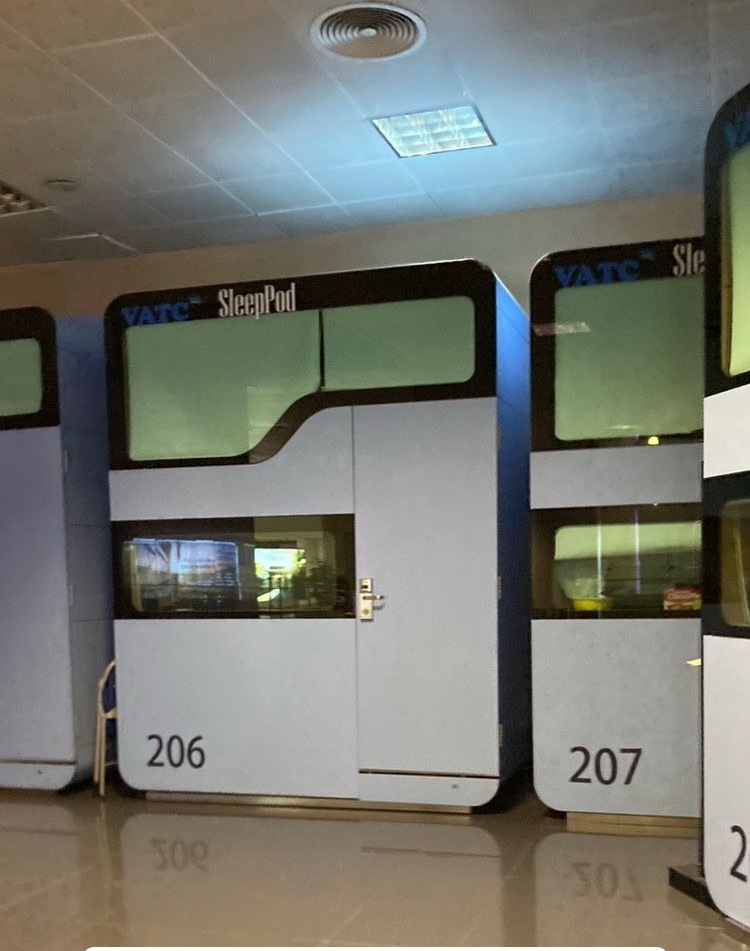
In November, I hit full social security age. On December 1st, I left the USA and began traveling full-time. From Los Angeles, I flew to Hawaii. My pandemic friend picked me up, with Spam Musubi already in the car. The following day, I flew out on United Airlines’ legendary Island Hopper. The 16-hour flight made stops in the Marshall Islands and the Federated States of Micronesia, before landing in Guam. I had flown into Anderson Air Force Base, in Guam, in the late 1970s, on my way to Okinawa Island, Japan. Once in Asia, my first pod stay was at the Hanoi Airport.
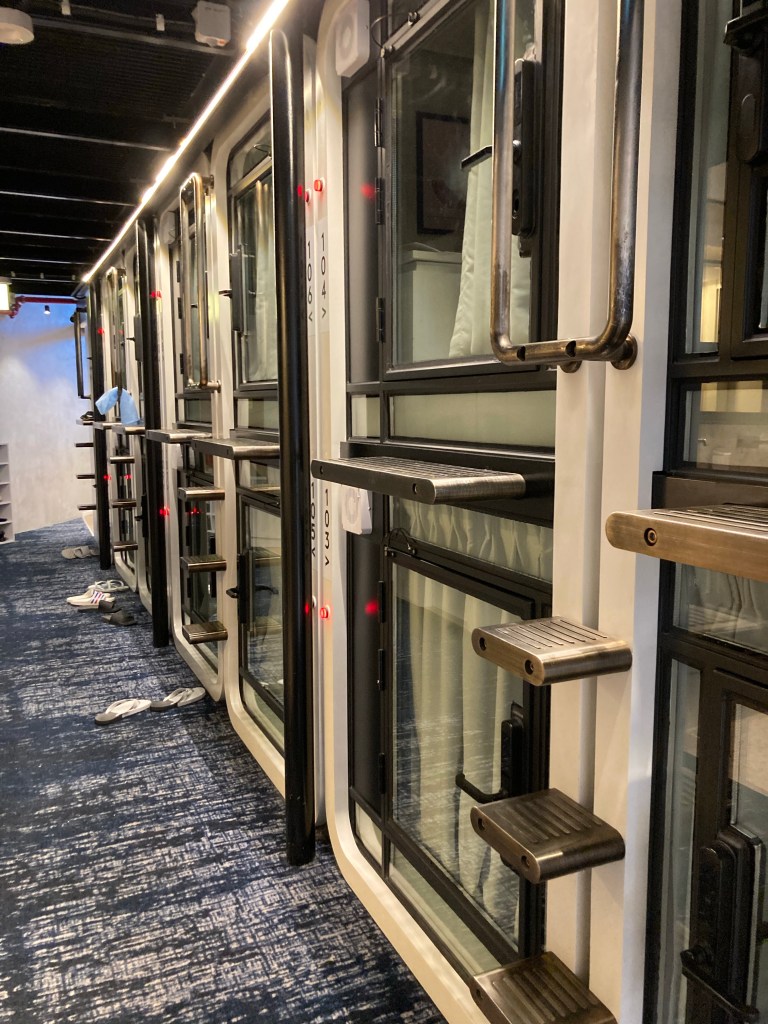
By the time I traveled through Southeast Asia (Thailand, Laos, Cambodia, Vietnam, Singapore, Indonesia, Malaysia, Taiwan, The Philippines, and South Korea) and then to Israel, booking the O Pod Hotel Tel Aviv seemed normal. It’s located on the Promenade, just steps away from the beach. It’s also a short walk from The Nicholas Armenian Orthodox Monastery, in nearby Jaffa. Having served in Armenia, I decided to visit Jaffa, rather than the Armenian Quarter, in Jerusalem’s Old City.
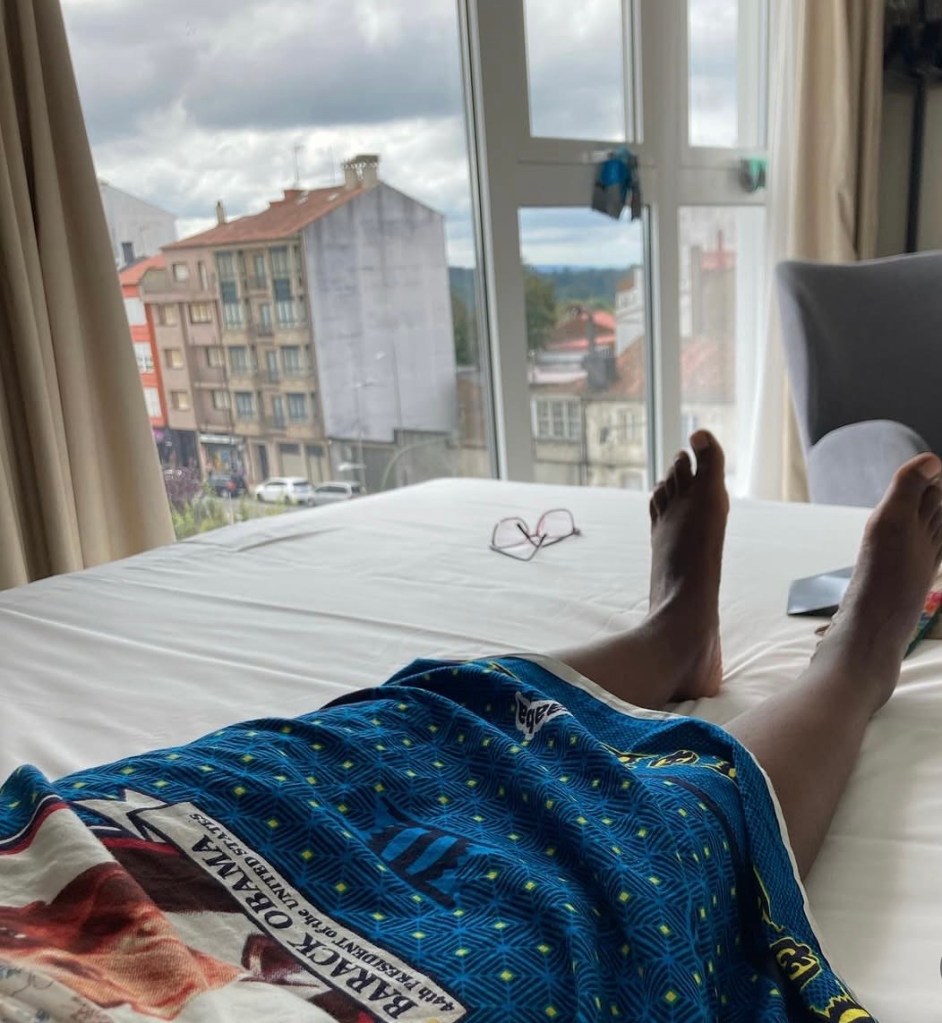
A few weeks later, I was back in Armenia. I needed a dental implant (on a front tooth) and decided to go toothless, for the necessary 90 days, while walking the Camino de Santiago for my 67th birthday. I booked a room in St. Jean Pied de Port, France. Then, two days later, I began the 500-mile-long journey. It normally takes 30 days to complete. It took me 40. I had to give up on Albergues, after day three or four. I was too slow. It took me ten to twelve hours to walk the daily 20 to 25 kilometers suggested on the schedule handed out by the Camino office in France. If I had to book a hotel room, oh well! My Camino! My way!
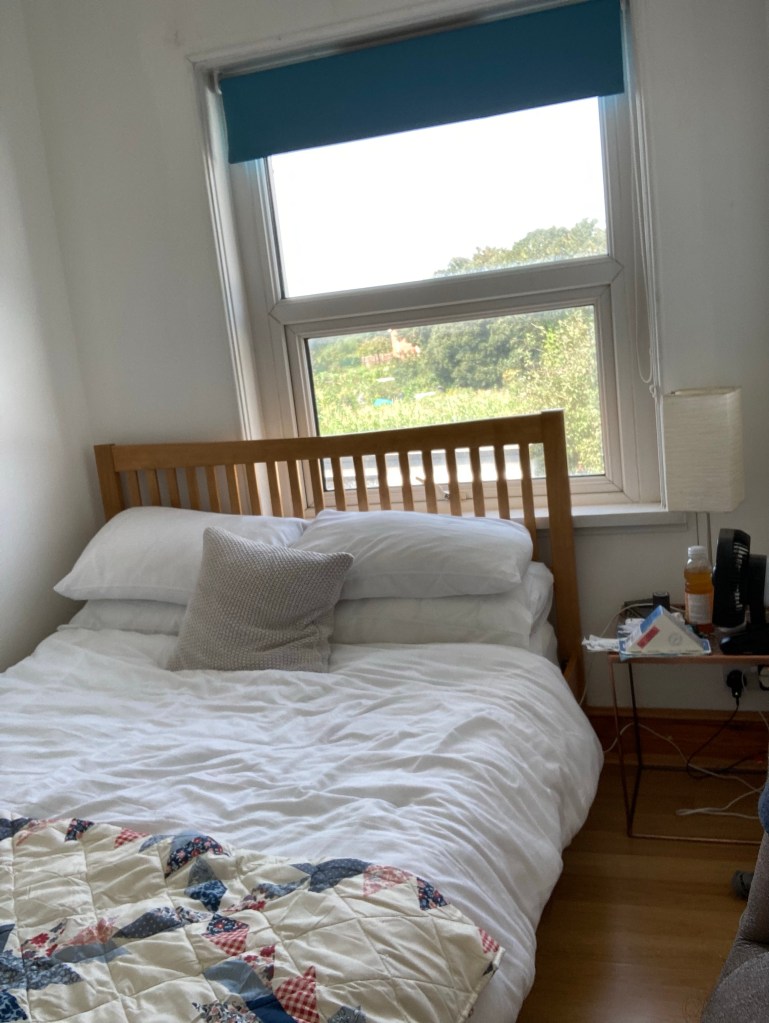
By the end of 2023, I knew I needed to slow down. After a full year of international travel, I booked myself an AirBnB in Cardiff, Wales and switched to full-time resting. It was great! I got up, shopped, returned home, did laundry, and cooked dinner! Who knew? Although I wasn’t ready to stop traveling full-time, I was ready to add in breaks! I was looking forward to 2024. But, could I do it at the same pace that I did in 2023? Should I even want to do that?
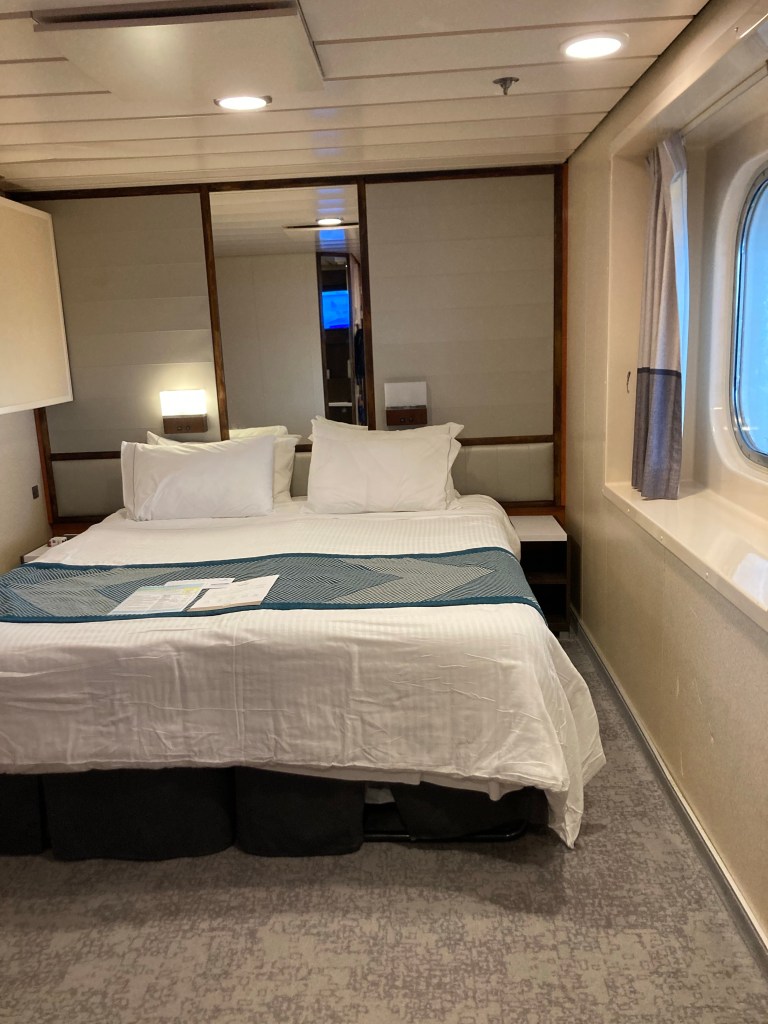
Adding cruise travel had never crossed my mind. Norwegian Cruise Lines offers a ten percent discount for military service. This new option taught me how to travel from Wales, do a long stay in Liverpool, take the train to down Southampton and get on a “back-to-back” MSC Northern Europe cruise, end up back in Southampton, book a room for two days, then get on a NCL transatlantic cruise to Miami. Fly from Miami to Baltimore, visit with a friend, then fly back to London! From there, take the Eurostar to Paris, then spend time (via train travel) in Germany, Poland, Hungary and then finally a bus through Slovenia, to catch a NCL Mediterranean cruise from Italy.
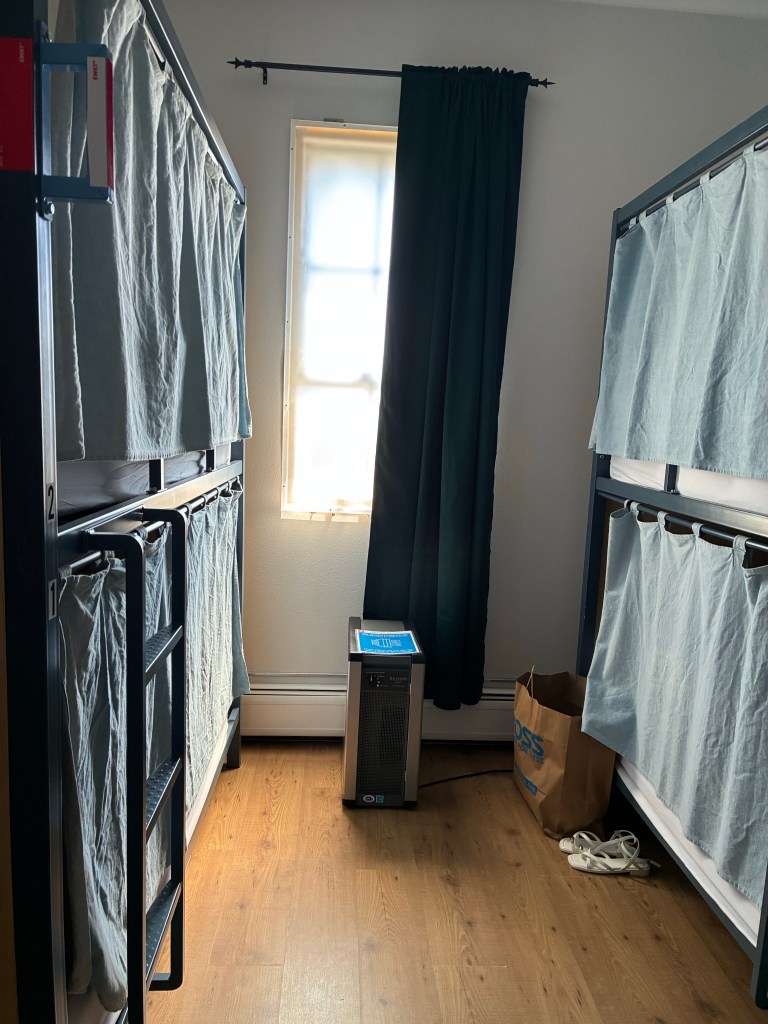
I remember my first solo trip to London, in 1984. I stayed in a Holland Park youth hostel. Back then, the hostel kept your passport. And, if you didn’t get back, before midnight, the doors were locked for the night. These days, I’m still OK with booking a hostel. While in San Diego, waiting for a cruise to Vancouver, I stayed in a hostel, a fifteen-minute walk from the train station. I had no issues with the two bunk beds (I got a lower bunk) in the one small room or issues with the people sleeping in the other three beds. I never saw them! The bathrooms, showers, and kitchen/dining area were all easily accessible.
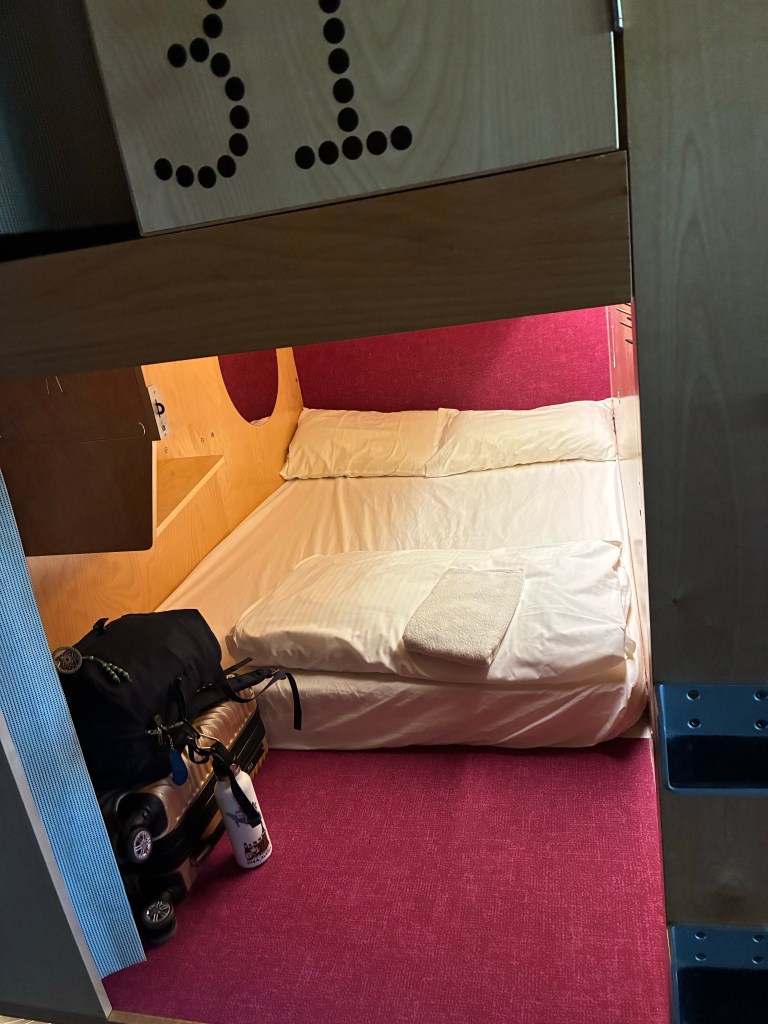
After leaving the ship, in Vancouver, I spent the first night at one of my favorite hotels, the Pinnacle Hotel Harbourfront. It’s a short walk from the cruise terminal. The next day, I took an Uber to the old YWCA, across from the BC Place Stadium. The single room was fine. There was a sink in the room. The shower areas and the toilets were down the hall. After five days, I caught a bus from Vancouver to Whistler. I stayed almost a week at the Pangea Pod Hotel. Once there, I once again did absolutely nothing! Well, there was an older couple, in a nearby hotel, and we always seemed to end up in Starbucks, at the same time, each day.
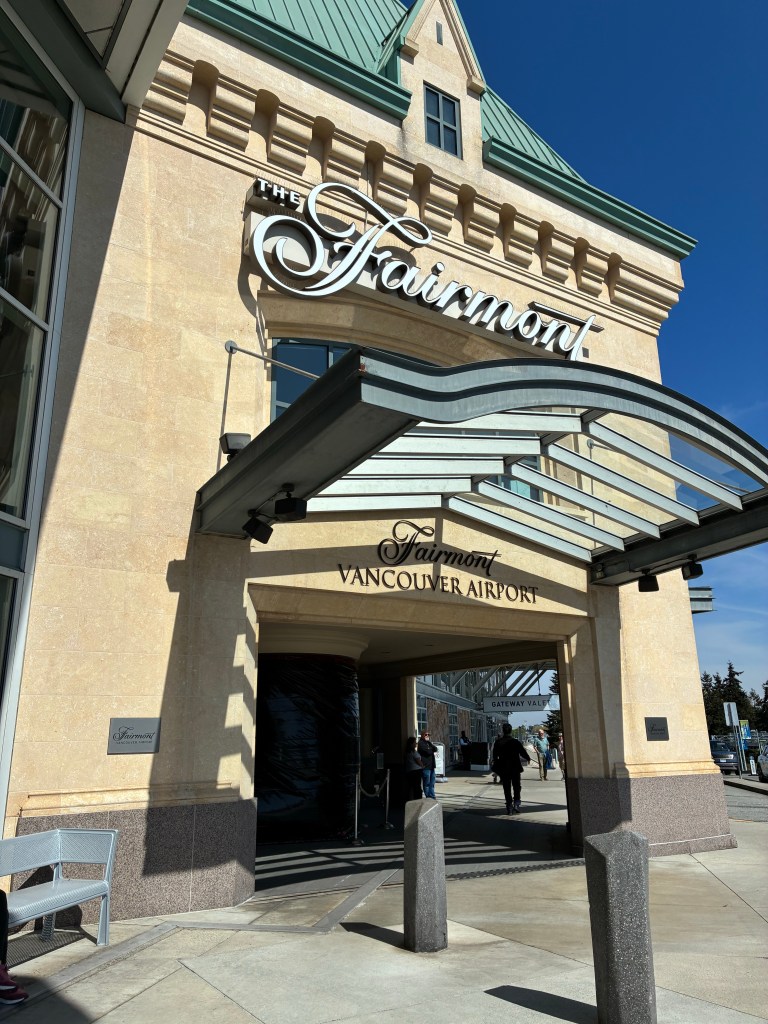
Finally, I took the bus back to Vancouver and spent a few days at the Fairmount Vancouver Airport Hotel. It’s another one of my favorite hotels. Those couple of nights were almost the same cost as the Alaskan cruise I was about to take. I’m OK with that. I have a monthly budget. Some months you spend less and some months you spend more. Let’s face it. This type of full time travel isn’t about the money. It’s about the experiences you want to have. If I could book all fancy hotel stays or just do month-long rentals would I? Probably not.
From the age of 10 to 17, I shared a room, in the basement of a house, with my mom. And, don’t get me started on housing projects, women’s shelters, and sleeping in the backseat of my mom’s car. So, trust me! I already know how the other half lives! Plus …what’s the name of this blog? XOXO —GGT


I loved this post, KJ. The narrative, the photos and the memories all added up to a powerful argument that experiences matter much more than luxury for travel — and for life. Thanks for sharing all of this.
LikeLiked by 1 person
Thanks! I just read your latest and I’m going to message you (a photo) on Instagram! You are so on point! I laughed out loud!
LikeLike
I always look forward to your posts. Your adventures and spirit are inspiring!
LikeLiked by 2 people
Thanks so much!
LikeLike
Hey, K J, you remain my inspiration knowing my past ten years of solo travels in the US pulling my RV has been my lifestyle choice I continue to enjoy and shared by so many others worldwide.
Your “Sleepless in Wherever,” blog post is a wonderful reveal of your incrediblly wonderful travel life you continue to enjoy. Please remain safe openhearted, happy, humble, and healthy, in your lifestyle journey of solo travels.
Marty
LikeLiked by 1 person
Thank you! Can we do ten more?
LikeLiked by 1 person
I’m sure, ten more and then some as long as the body carries me forward. 😁🧑🏾💻🫶🏾
LikeLiked by 1 person